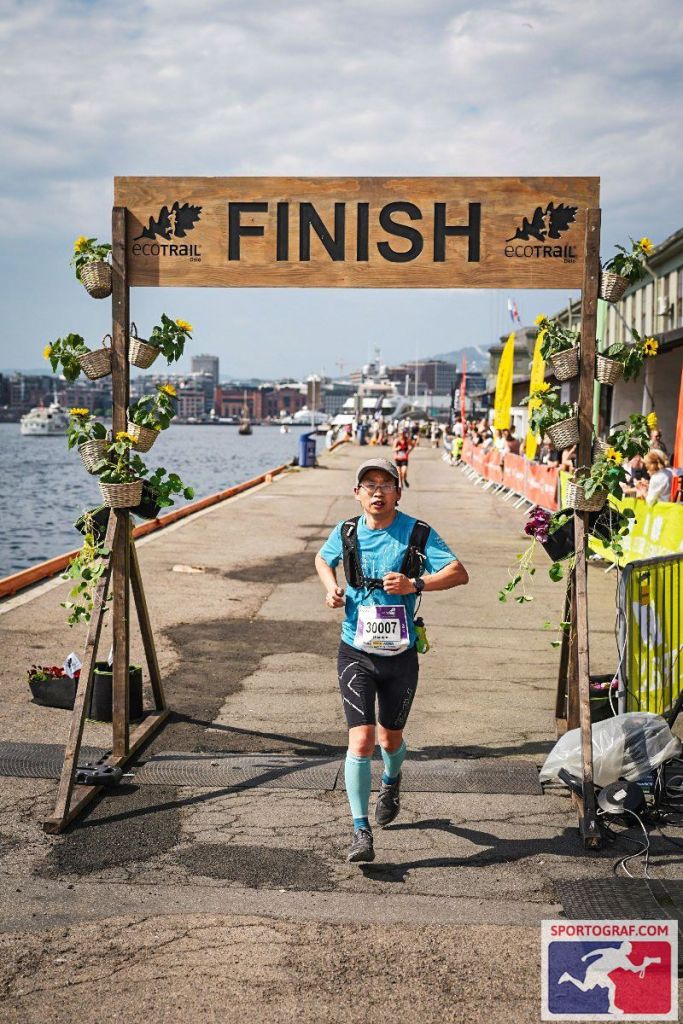
On May 25, 2024, blessed with sunshine, I completed my first trail race at 3:10 PM, clocking in at 3 hours, 6 minutes, and 37 seconds. Crossing the finish line, although utterly exhausted, I felt a profound sense of satisfaction for fulfilling another running aspiration.
My decision to participate traces back to April this year, during which the Oslo Ecotrail caught my interest. However, the thought of participating alone was daunting. During a casual lunch, I discussed this with my project manager who had experienced the race multiple times. His sudden realization led to enthusiastic advice: “Definitely register! Go for 50KM if not, I’ve done 31KM three times and now aim for 50KM.”
“Absolutely not, it’s my first trail race; I think 31KM is already a challenge,” I protested, startled by the thought.
We decided I would satisfy my preference for 31KM this year, and his desire for 50KM the next year, effectively planning our races for two consecutive years.
After registering, I needed at least a basic understanding of trail running, including essential knowledge and precautions, although there was no time left for specialized training.
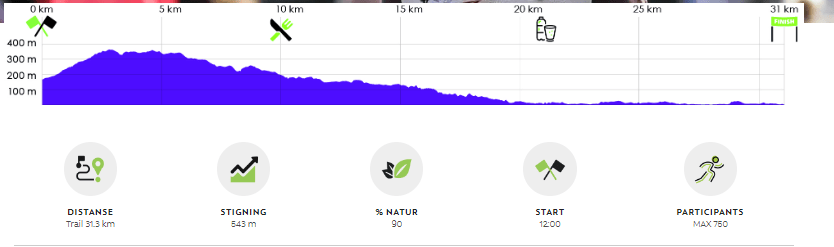
The official race map misleadingly suggested that after an initial three-kilometer ascent, the course would mainly descend, which seemed manageable. However, the initial climb proved genuinely challenging, followed by a forest trail run up to the 10-kilometer aid station. The segment from 10 to 20 kilometers was unexpectedly the most thrilling part of the course, a fact not apparent from the map.
Previously, a colleague who had run the race described this part to me. I imagined it as a wide gravel and concrete path with gentle undulations. In reality, it was a narrow, winding forest trail along a river, filled with roots, mud, and rocks, where descents were so steep that braking was necessary, and ascents could only be managed by walking, leaving me gasping for breath. The best running stretch, contrary to the map’s impression of a 10-kilometer flat, was actually a gravel and concrete path leading towards the city center.
The race committee had issued multiple notices emphasizing the importance of hydration, especially given the expected high temperature of 29 degrees Celsius. I took extra precautions, arming myself with two bottles of energy drink and an additional water bottle to avoid stopping for refills and minimize time lost.
It being my first race, I was keen not only to gain the experience but also to achieve a satisfying performance.
The 31KM race started at the Sørkedalen Idrettsanlegg, located on the hillside outskirts of Oslo, with the finish line at the Vippa bar by the waterfront.
The route commenced from the forest trails of Sørkedalen Sports Park in the northwest of Oslo, a valley predominantly consisting of farms. It descended through the woods, passing quaint red cottages, small shops, horses, and cattle—remarkably exotic yet close to the city. Sørkedalen is also a favored destination for many of the capital’s skiing enthusiasts, known for its early snowfall and late thaw.
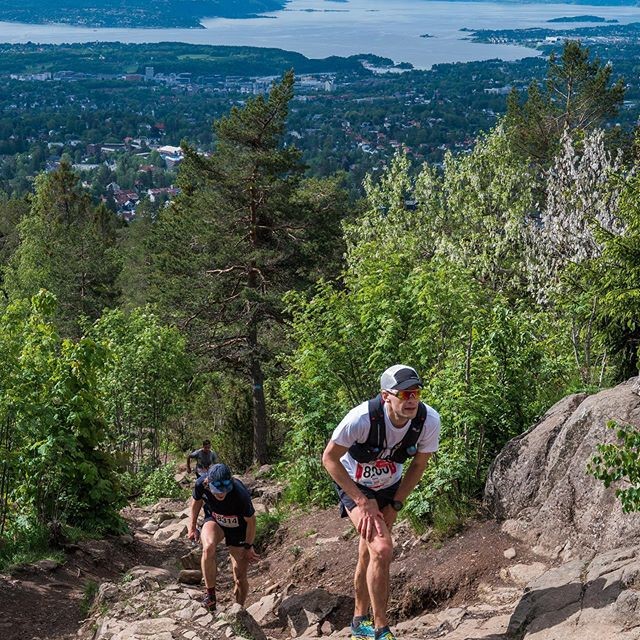
From the 31KM start, which also served as a checkpoint for the 50KM and 80KM races, it was crucial to pace oneself. The first 2.5 kilometers involved a continuous climb through forest paths and trails. This section offered spectacular views of Oslogryta and the fjord, as well as landmarks like Tryvannstårnet and Holmenkollen across Sørkedalen. A few kilometers later, the route reached its peak, having ascended approximately 200 meters from the start. What followed was a descent into a picturesque blue trail leading to Østernvann for a brief respite. Shortly thereafter, the route reached Fossum Sports Park, offering food and drink stations, before the terrain along Lysakerelva became progressively rugged and narrow.
From Lysaker station, the course passed through the scenic Vækerøparken, Bestumkilen, the pastoral Bygdøy Sjøbad, Frognerkilen, and then through Aker Brygge. After traversing the waterfront at Rådhusplassen, the final kilometer wound past Kontraskjæret and Akershus Fortress, culminating at the dock outside Fiskhallen/Vippa.
I left home at 9 AM, took metro line 3 to Røa, then to the meeting point, where volunteers directed us from the metro station to the free buses transporting us from the city center to the starting point.
The starting point for 31KM, also serving the 50KM and 80KM participants, was well-prepared with ample food and water, although those running only 31KM were not permitted to partake. It was essential for participants to bring their own supplies, as no food or water would be provided at the starting point.
Upon arrival, we witnessed a 50KM participant passing by, and our cheers evidently spurred him on.
At the starting point, baggage storage was available, and post-race, a van transported the bags to the finish line, allowing runners to access their necessities after the race.
After warming up briefly with the project manager, the race commenced. Due to the large number of participants and an initial 3-kilometer ascent, starts were staggered every two minutes. To reduce pressure, the project manager and I opted to start in the third group.
Caught up in the excitement, I forgot to start my watch until a few hundred meters into the race when I intended to check my heart rate.
This segment was physically taxing, but at the moment, I was unaware of it; my goal was simply to prove that I could run nearly 3 kilometers uphill continuously. Seeing most other participants walking, I felt relatively strong, despite the exhaustion. After climbing the initial three kilometers and entering the forest, I was fortunate that the weather was exceptionally favorable this May; the forest was snow-free and dry, offering a safer running experience.

As this was my first trail run, my priority was safety—I aimed to avoid falls and sprains. I later realized that I had made a navigational error on this forest path, taking too many large leaps, which sapped much of my energy, a reflection I made in hindsight.
Despite several errors, the excitement of my first trail run was overwhelming. The occasional glimpses of primitive forest roads amid the forest paths invigorated us; each sighting brought joy, and I eagerly anticipated speeding up on these stretches.
After 10 kilometers, I did not stop for water or food, carrying energy gels which I consumed along with water approximately every 5 kilometers, aligning with my usual urban marathon strategy.
Checking my time at the 10-kilometer mark, I was disappointed to find I was slower than expected, indicating the course was more challenging than I had anticipated. What I didn’t foresee was the next segment.
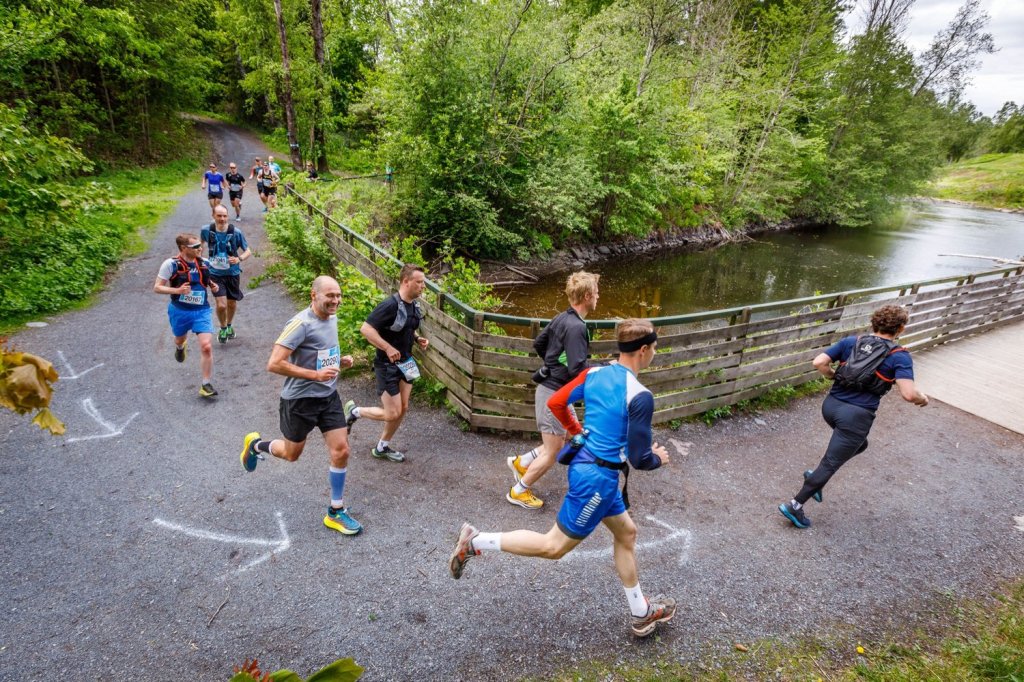
I had expected the 10 to 20-kilometer stretch to be a continuous undulating stone path nearing the urban area, with little remaining forest. Instead, it was a narrow, rugged forest path along a river, extremely challenging and tight for space. A professional female runner ahead frequently turned back to remind me to signal if I needed to pass. Another older runner, noticing me close behind, kindly stepped aside to let me through.
This was arguably the most exhilarating path I had ever traversed, and its challenging nature likely contributes to the appeal of trail running among enthusiasts.
On this uneven path, I witnessed numerous falls and stumbles. One runner had to be supported by a companion to continue walking slowly. Fortunately, I managed not to fall, although there were a couple of close calls—one caused by tripping over a root, another when my legs gave out during a leap.
Despite the exhaustion, after completing this 10-kilometer stretch, I recognized my energy was nearly depleted, which prompted reflections on earlier mistakes.
Although drained and challenged as one might be after 32 kilometers in a full marathon, such obstacles are surmountable, and success is achievable.
I believed in my ability to overcome.
The course beyond 20 kilometers, along the waterfront on either gravel or urban concrete, with the sea breeze or the sight of lush pastures, alleviated some of my physical exhaustion. However, my heart rate remained above 170, making me feel nearly defeated. I could only maintain a pace of about 540 or even slower, significantly below my usual marathon LSD training pace. I had to acknowledge my fatigue, more intense than I had anticipated. I had underestimated the 31 kilometers, finding it more taxing than a full marathon.
Lacking the energy to sprint across the finish line, despite the last 3 kilometers being a route I was intimately familiar with and had run many times, I lacked the motivation or strength to accelerate. I simply longed for the end, eager to stop running.
Crossing the finish line brought immense relief. Overwhelmed by heat and thirst, I drenched myself with water from the bucket and continuously drank nearby beverages. Ice cream was also available, a necessary treat on such a hot day.
Completing my first 31KM trail race, I was immensely satisfied with my performance—not just with the race results, but also with my physical and mental endurance.
This adventurous journey tested both body and mind, teaching me that with clear goals, no matter how rugged the path, we possess the courage and strength to advance. Let us carry this resilience and wisdom not just on the race track but in every step of life, aspiring to reach further and higher.

 SunnyInNorway
Leave a comment